
Shockwave Therapy in Nevada
Acoustic shockwave therapy is a modern, cutting-edge treatment for acute injury and chronic pain in tendons, ligaments, and muscles throughout the body.
ProKinetic
Shockwave Therapy in Nevada
Dr. Grant sends targeted high-energy acoustic waves (not vibration) deep into affected soft tissue, creating micro-pressure changes that increase cellular permeability and boost localized blood flow (microcirculation). By promoting vasodilation (widening blood vessels) and angiogenesis (forming new blood vessels), this treatment brings vital oxygen and nutrient supply to poorly vascularized tissue. These acoustic pulses also activate fibroblasts—the cells responsible for producing collagen—helping break down chronic scar tissue and rebuild healthy tissue. Patients across Southwest Missouri and Southeast Kansas are often surprised by how quickly this non-invasive therapy restores pain-free movement.
How it works
What to expect with shockwave therapy
- Step 1
Assessment and mapping
We examine the injury site, review your history, and use palpation to map the precise area of tendon or soft-tissue involvement before selecting shockwave parameters tailored to your condition.
- Step 2
Focused shockwave treatment
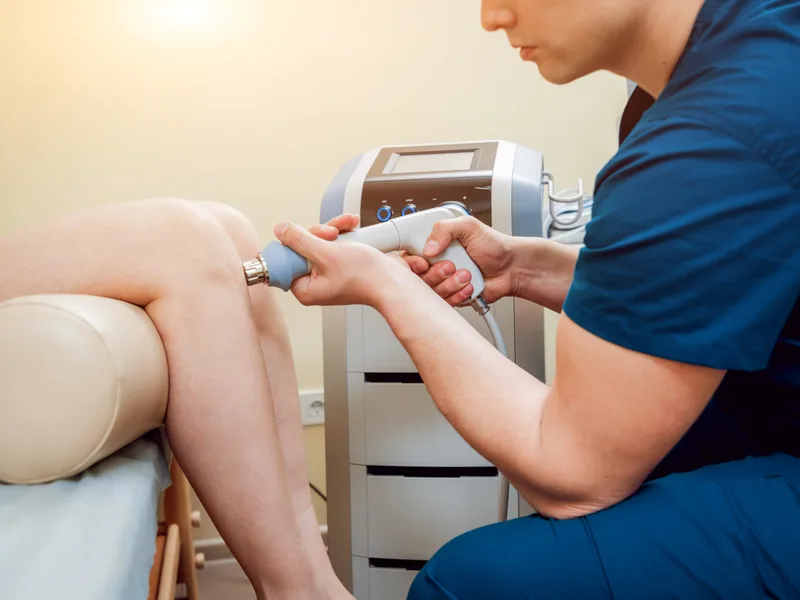
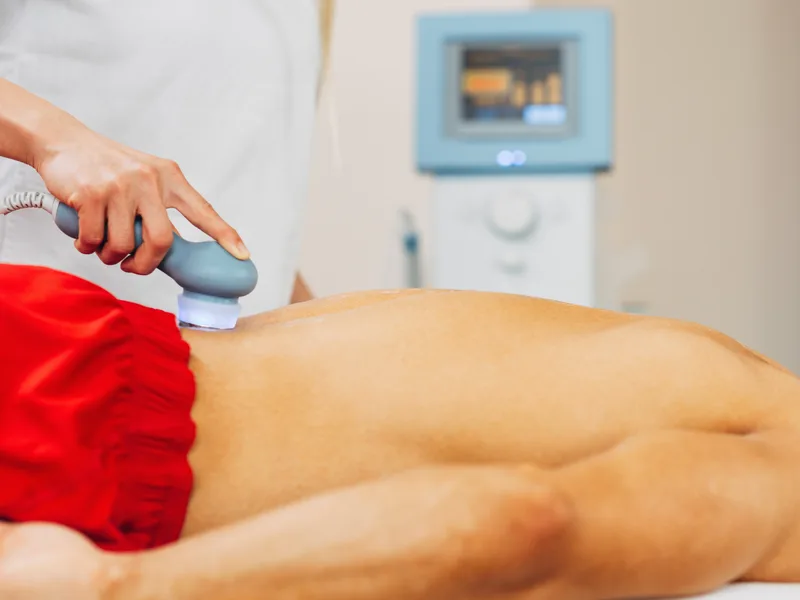
The handheld applicator is moved slowly over the treatment area while delivering acoustic pulses. Sessions typically last about 10 minutes — most patients feel a deep pressure or mild ache that eases quickly after the device stops.
- Step 3
Rehab and home support
We pair shockwave therapy with targeted stretching, loading exercises, and any complementary services that will accelerate your recovery between sessions.
Why patients choose it
Benefits of shockwave therapy
Stimulates genuine tissue repair in chronically stalled injuries
Non-invasive — no needles, no incisions, no downtime
Reduces calcific deposits in tendons and shoulders
Typically 3-4 weeks versus months of other failed conservative care
Can delay or eliminate the need for cortisone injections or surgery
Effective for plantar fasciitis, carpal tunnel, shoulder tendinopathy, and more
The basics
About shockwave therapy
Many soft tissues throughout the body have a notoriously limited blood supply, which is why chronic injuries—whether affecting muscles, fascia, connective tissue, or joint structures—heal slowly or stall out entirely. While the initial inflammation may subside, underlying tissue breakdown often remains unresolved, leaving conventional treatments to offer only temporary relief.
Shockwave therapy resets that cycle. By delivering controlled micro-mechanical stress directly into targeted tissues, it prompts the body to recognize a fresh healing signal. This triggers localized blood flow, stimulates growth factors, and encourages active collagen remodeling—igniting a genuine repair cycle that restores function where rest, stretching, and routine therapies have fallen short.
What is shockwave therapy?
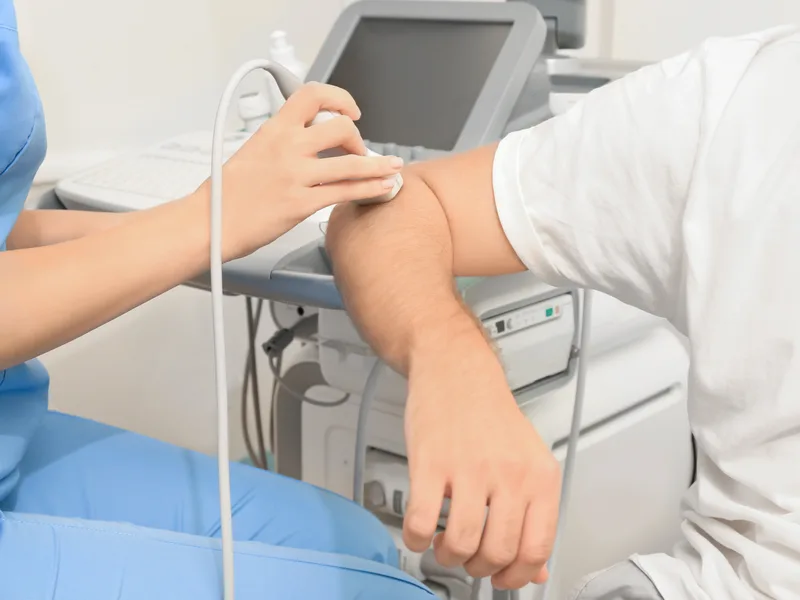
Shockwave therapy (formally known as extracorporeal shockwave therapy, or ESWT) is a non-invasive treatment that uses a handheld device to deliver focused acoustic waves through the skin and into injured tendons, ligaments, or other soft tissue. The waves create controlled micro-stress in the tissue that triggers a cascade of natural repair processes — new blood vessel formation, release of growth factors, and collagen remodeling — restarting a healing response that has stalled.
The “shockwave” name sounds dramatic, but the treatment is gentle. There are no needles, no incisions, and no drugs. Patients feel a deep pressure or mild ache during the session that fades quickly once the device stops. Most people are back to their normal day immediately after.
Shockwave therapy is best known for plantar fasciitis, tennis elbow (lateral epicondylitis), calcific shoulder, carpal tunnel syndrome, and rotator cuff tendinopathy — conditions where the tissue has been injured long enough that it struggles to heal on its own.
What to expect
Your first shockwave session starts with a brief assessment. Dr. Hartman will review your history, examine the affected area, and use palpation to precisely map where the injured tissue is most reactive. This targeting step matters — placing the shockwave energy accurately is what makes the difference between good outcomes and average ones.
During treatment you’ll be comfortably positioned on the table. The handheld applicator is applied directly to the skin over the treatment area and moved slowly over the injury site while delivering pulses. Sessions typically run 10 minutes depending on the area and the condition. Many patients describe the sensation as a deep vibration or pressure; the most reactive spots may feel like a brief ache that eases almost immediately when the device moves on.
After the session there’s no recovery time. Mild soreness for a day or two is normal and actually a good sign — it means the healing response is starting.
Who it helps
Shockwave therapy is especially effective for chronic tendon and soft-tissue problems that haven’t responded to standard conservative care. If you’ve been stretching, icing, or resting an injury for months without full resolution, shockwave may be the catalyst your body needs.
Conditions we commonly treat with shockwave:
- Plantar fasciitis — persistent heel pain from an inflamed or degenerated plantar fascia
- Elbow pain (tennis and golfer’s elbow) — lateral or medial epicondylitis that won’t fully heal
- Shoulder pain and rotator cuff tendinopathy — including calcific tendinitis of the shoulder
- Overuse injuries — chronic strain patterns in athletes and active patients
Not every patient is a candidate — we screen at your exam for the small number of contraindications — but the majority of people with these chronic soft-tissue problems are good candidates and see meaningful improvement.
Why choose ProKinetic
Shockwave therapy works best as part of a complete plan, not as a standalone procedure. At ProKinetic, Dr. Grant Hartman pairs shockwave with targeted rehab and other tools that keep the healing momentum going between sessions. You get a clear diagnosis, an honest timeline, and a plan built around your injury — not a one-size-fits-all protocol.
We serve patients throughout Southwest Missouri and Southeast Kansas. Ready to get your stubborn injury finally moving in the right direction? Visit our New Patient page or contact us to schedule your exam.
What it helps
Conditions we treat with shockwave therapy
What is shockwave therapy?+
Shockwave therapy (also called extracorporeal shockwave therapy or ESWT) uses a handheld device to send high-energy acoustic waves through the skin into injured tendons or soft tissue. The waves stimulate blood flow, break down scar tissue, and trigger the body's natural repair cycle in areas that have stalled.
Does shockwave therapy hurt?+
Most patients feel a deep pressure, vibration, or temporary ache during the session — especially over the most irritated spot. The sensation is usually very tolerable and fades within minutes of the treatment ending. We adjust intensity to your comfort level throughout.
How many shockwave sessions will I need?+
Most conditions respond well in 3–4 weeks of treatment. After your exam Dr. Hartman will give you a realistic plan with a clear timeline based on your specific injury and how long you've had it.
Is shockwave therapy safe?+
Yes. It is a non-invasive, drug-free therapy supported by substantial research. We screen every patient before starting — there are a small number of contraindications (such as blood-clotting disorders or active infection in the area) that your intake and exam will rule out.
Who is a good candidate for shockwave therapy?+
You may be an ideal candidate if you experience chronic pain, stiffness, or overuse injuries lasting longer than a few weeks; have stalled in your recovery despite rest, physical therapy, or stretching; want a non-invasive, drug-free alternative to cortisone injections or surgery; or deal with stubborn scar tissue, calcifications, or recurring muscular knots. We confirm candidacy at your exam.
Can shockwave therapy help plantar fasciitis?+
Plantar fasciitis is one of the most studied and best-responding conditions for shockwave therapy. When stretching, orthotics, and rest haven't resolved the heel pain, shockwave often produces the healing response the tissue has been missing.
What is the recovery like after a session?+
There is no downtime. Some patients experience mild soreness in the treated area for 24–48 hours — similar to post-exercise soreness — which is a normal sign of the healing process starting. Most people return to normal daily activities immediately.
Will my insurance cover shockwave therapy?+
Coverage varies by plan. Many policies do not yet cover ESWT, though some do — particularly for plantar fasciitis. We'll walk you through affordable self-pay options if needed.
How does shockwave therapy compare to cortisone injections?+
Cortisone reduces inflammation in the short term but does not repair the underlying tendon damage and can weaken tissue with repeated use. Shockwave stimulates genuine structural repair and in many studies shows better long-term outcomes for chronic tendinopathies without the risks of repeated injections.
Can shockwave be combined with other therapies?+
Absolutely — and it often works best as part of a broader plan. Dr. Hartman commonly pairs shockwave with adjustments, decompression, or a targeted rehab program to accelerate healing and help results last.
Book online
Schedule your shockwave therapy visit
Your first shockwave therapy visit, including assessment. 30 minutes. Prefer to talk to a person? Call or text (417) 661-1832.
Explore more